Video generation studio
Short videos from typed descriptions, on a single 8 GB laptop GPU.
01The studio
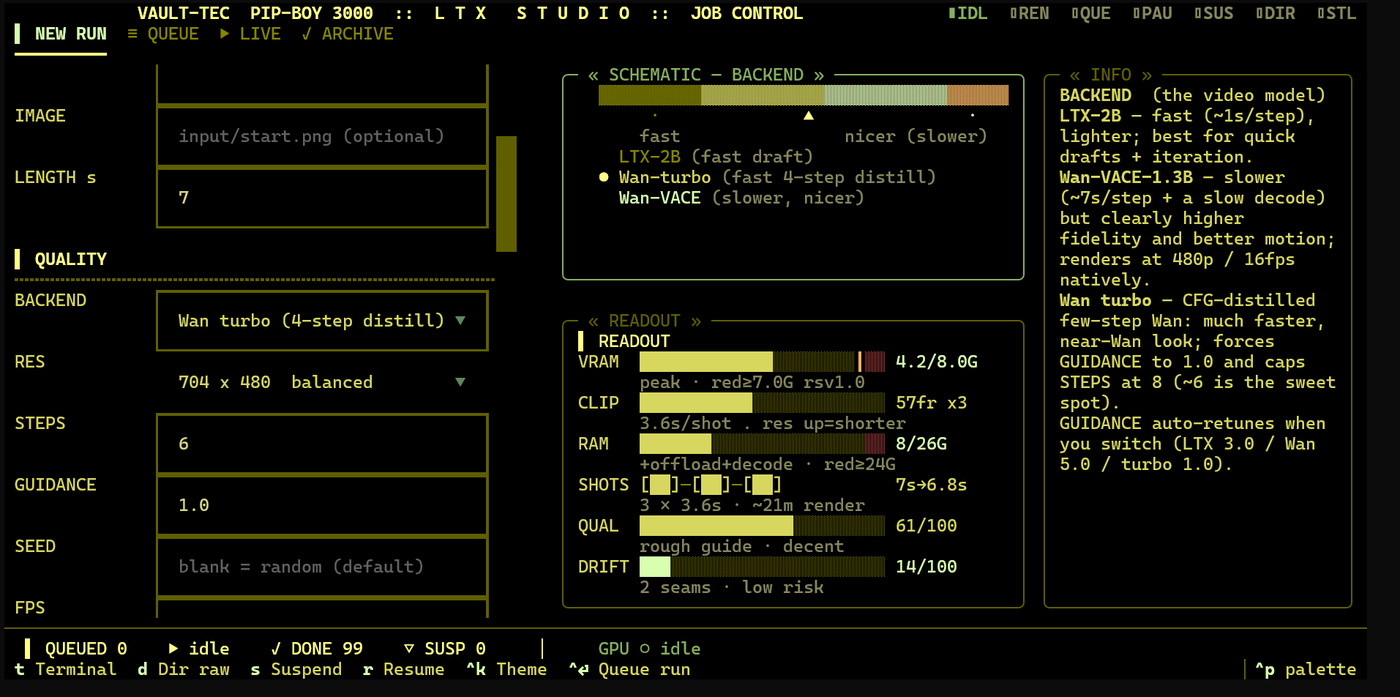
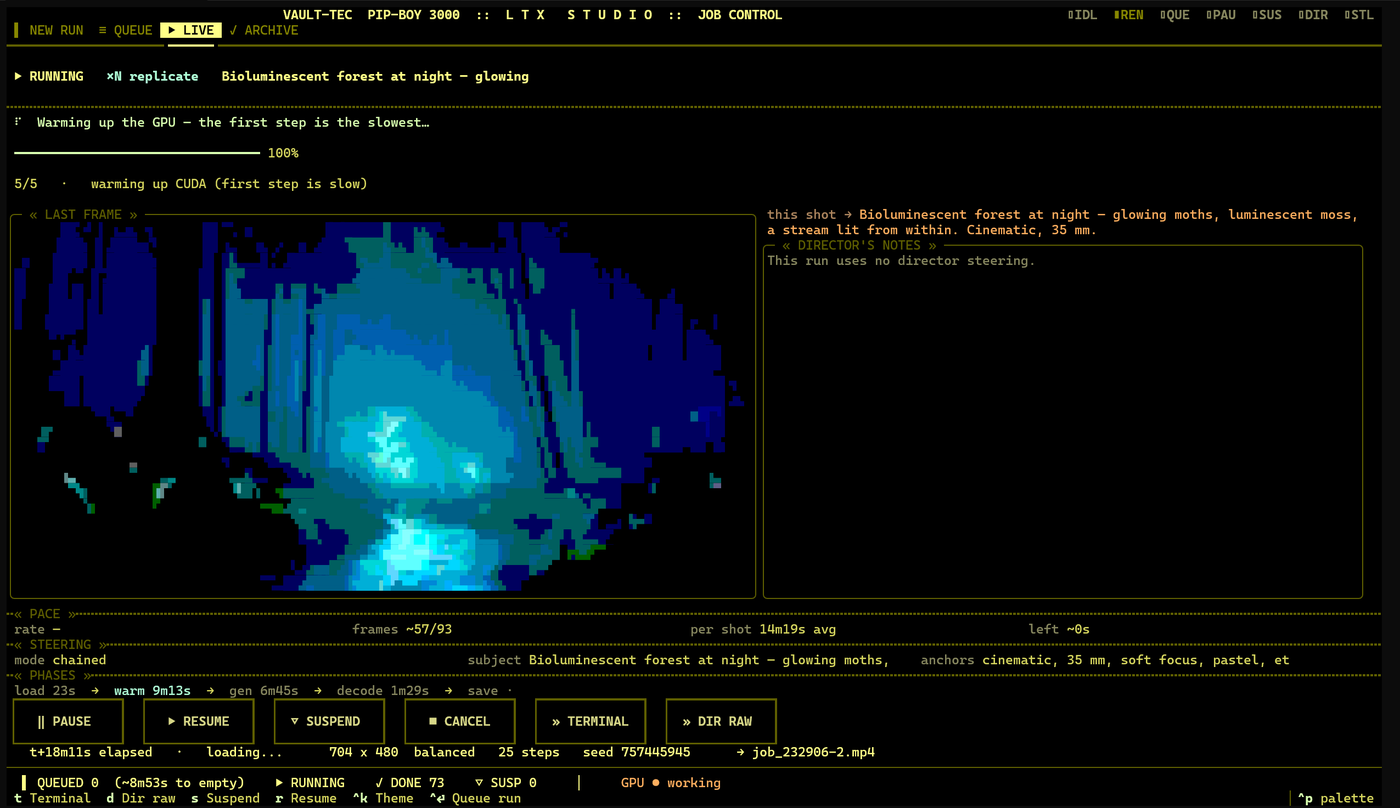
Everything runs from one terminal UI. A typed shot description is translated by a resident 4-bit vision-language model (Qwen3-VL) into concrete generation settings, while readout meters estimate VRAM use, quality, drift, and render time before a render begins. Two open-weight video backends share the 8 GB card, and short shots can be chained into longer clips. Each run archives its settings and telemetry for later comparison or re-analysis. I built the orchestration, UI, and measurement layer around models trained by others.
02Output
The measurement layer records seam and drift telemetry and includes a blind A/B harness, so pipeline changes can be compared without relying only on the appearance of a generated clip. Drift control between shots uses cited AdaIN latent anchoring plus a custom color-matching pass.
03Two points in development
The studio grew out of an earlier AnimateDiff pipeline adapted to the same unsupported 8 GB card through a PyTorch-SDPA attention backport, a from-scratch LCM scheduler, and a convolution-aware LoRA merge. Modern open-weight models produced the later clips shown here; the earlier implementation work supplied the model-level foundation for the current orchestrator.
Full detail — architecture, the marker protocol, running it — in the README: github.com/harrisonwolf/ltx-studio